Context:FIT2094_MOC · a procedural, relationally complete query language over relations · results are relations (closure) · what a DBMS translates SQL into
Quick Revision
🎯 Objective: a procedural, relationally complete query language over relations ➔ states how.
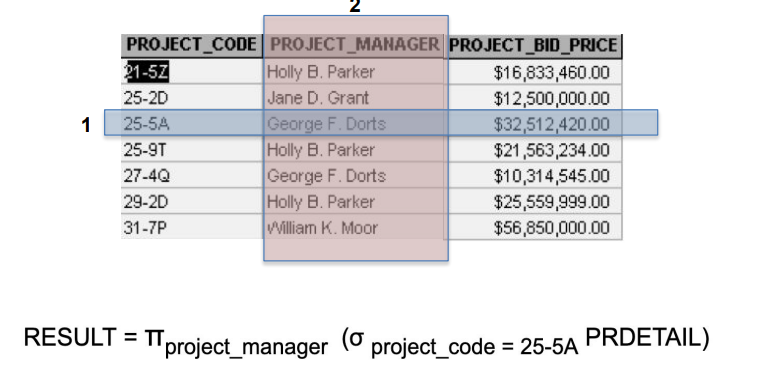
πproject_manager(σproject_code=’25-5A’(PRDETAIL))
💡 Common Mistake:Pure algebra has no NULLs ➔ it assumes complete information; NULLs are an SQL addition. Algebra’s explicit operation order is what enables optimisation.
⚖️ Core Decision Matrix
Language
Procedural?
Role
relational calculus
no
completeness benchmark
relational algebra
yes
execution/optimisation
SQL
no (declarative)
user queries
graphical
no
visual
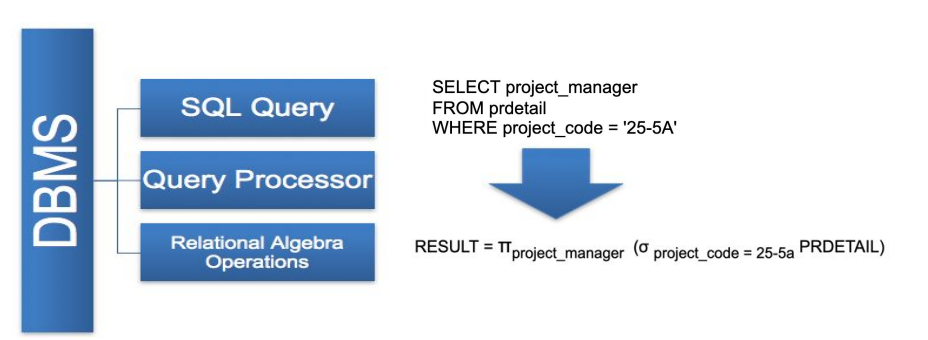
When It Flips: algebra prescribes an operation order (good for the optimiser); calculus/SQL state only the result — the DBMS bridges them by compiling SQL to algebra. Relational join generalises FIT1058 relational composition to data.
📊 Exam Execution Trace
Applied Exercise
Problem: Translate SELECT project_manager FROM PRDETAIL WHERE project_code='25-5A' into algebra.
Derivation Proof / Hand-Calculation Walkthrough: